

South Carolina’s Revolutionary Road: Five Essential Sites for Understanding America’s Foundings
Updated: Jul 11
By Michael Burgess
"Our cause is noble. It is the cause of mankind, and danger to it springs from ourselves."— George Washington, March 31, 1779
The fireworks have faded. The cookouts are over. As the nation moves beyond the celebration of the 250th anniversary of the Declaration of Independence, many Americans will naturally return to their everyday routines.
Yet doing so too quickly risks overlooking a remarkable opportunity. While the anniversary of American independence may have passed, the broader commemoration of the American Revolution continues through 2033. This ongoing observance invites us to reflect not only on how the United States was founded, but also on the principles, sacrifices, and aspirations that continue to shape the nation today.
The American Revolution secured our independence from Great Britain and established a nation free from monarchy and imperial rule. It founded a republic that has endured for 250 years as a government accountable to its citizens rather than to kings or autocrats. It forged a national identity rooted in shared history, common purpose, and the belief that all people are created equal.
Perhaps most importantly, the Revolution elevated liberty and equality as the defining ideals of American political life. Though imperfectly realized, these principles have guided the nation’s progress and inspired movements for freedom around the world.
Those ideals were not secured by words alone. They were won through sacrifice on battlefields stretching across South Carolina. From the oppressive heat of Camden to the rolling hills of Kings Mountain and the open fields of Cowpens, ordinary men transformed the Declaration of Independence from a statement of aspiration into a living reality.
Among them was my fourth great-grandfather, Colonel James Williams, who was killed at the Battle of Kings Mountain while fighting for the Patriot cause. Like thousands of others, he gave what Abraham Lincoln would later call “the last full measure of devotion” in the struggle for liberty.
To truly appreciate the sacrifices of the Revolutionary generation, one must walk the ground where they fought. S.C. was the site of more than 100 military engagements during the war, making it one of the most important theaters of the conflict. While visiting every battlefield and historic site would require years of exploration, five locations stand out as essential destinations for understanding the Revolution in the Palmetto State. These are in addition to Fort Moultrie, which has received much attention elsewhere in this newspaper.
Camden: The beginning of understanding
Any serious exploration of the Southern Campaign must begin in Camden. Unlike the other destinations on this list, Camden is not a single battlefield park but an entire historic community deeply connected to the Revolutionary War. Between the summer of 1780 and the summer of 1781, Camden served as the principal British stronghold in S.C.’s interior and became the focal point of efforts to pacify the backcountry.
The town witnessed two major battles, both of which were Patriot defeats. Yet those defeats proved critical to eventual victory. Camden became a classroom where hard lessons were learned, lessons that would later contribute to success at Cowpens and ultimately Yorktown.
Visitors should begin at the Revolutionary War Visitor Center in downtown Camden, which provides exhibits, orientation materials, and knowledgeable staff who can help shape an effective tour of the area.
Key stops include Historic Camden, a reconstructed colonial village that offers insight into life during the Revolutionary era; the Quaker Cemetery, where recently recovered Continental soldiers from the Battle of Camden have been reinterred; and the battlefield itself, where one of the Patriot cause’s darkest days unfolded on August 16, 1780.
Camden reminds visitors that defeat can be a powerful teacher — and that victory is often built upon lessons learned through hardship.
Musgrove Mill State Historic Site: Hope in a Time of Despair
Among S.C.’s most overlooked Revolutionary War sites, Musgrove Mill offers an exceptional introduction to backcountry warfare. Located north of Clinton, the park commemorates the Patriot victory of August 19, 1780. Coming only days after the devastating fall of Charleston and the disastrous defeat at Camden, the victory provided desperately needed encouragement to Patriot supporters across the state.
Today, the site combines historical interpretation with natural beauty. Visitors will find a well-designed museum, informative exhibits, and several hiking trails that wind through terrain similar to what soldiers experienced during the campaign. During autumn, the landscape becomes one of the most scenic destinations in the state park system.
Musgrove Mill demonstrates that even in the darkest moments of the Revolution, determination and resilience could still produce meaningful victories.
Kings Mountain National Military Park: America’s first Civil War
The Revolutionary War in the South was more than a struggle between Britain and the colonies. In many respects, it was America’s first civil war. Nowhere is that reality more evident than at Kings Mountain.
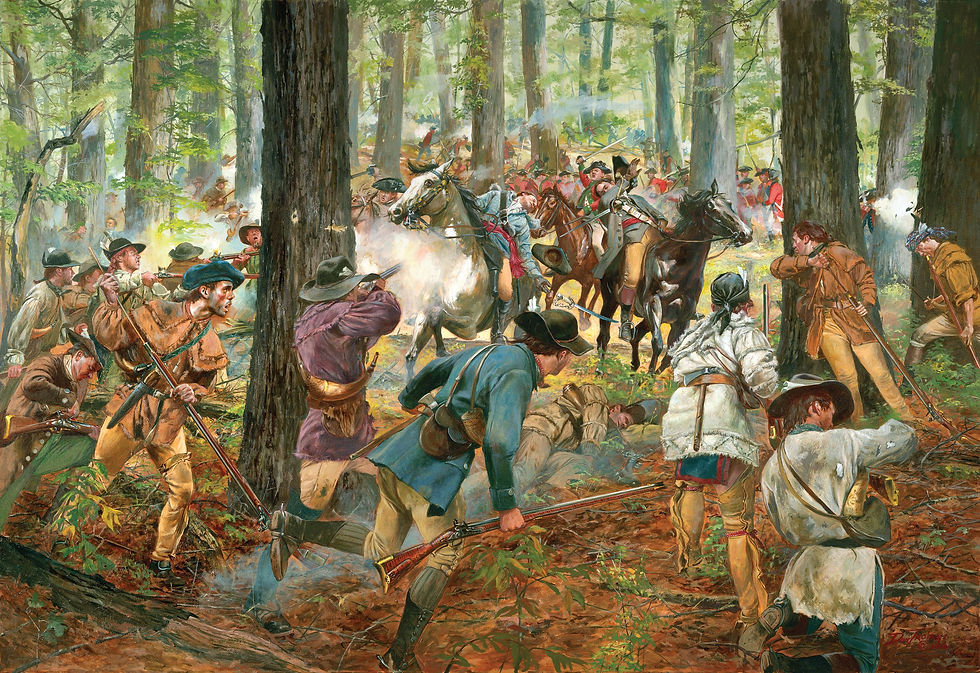
On October 7, 1780, approximately 2,000 men fought on the wooded ridge that straddles the S.C./North Carolina border. Remarkably, among the thousands engaged, only one British officer participated: Major Patrick Ferguson, a Scottish professional soldier commanding a force composed largely of Loyalist Americans.
The battle ended with the destruction of Ferguson’s army and a decisive Patriot victory. Just as significantly, it shattered British hopes of mobilizing large numbers of Loyalists to regain control of the South.
Kings Mountain was also among the war’s most brutal engagements. The fierce fighting and bitter divisions between neighbors produced acts of violence that reflected the deeply personal nature of the conflict.
A British historian once compared visiting Kings Mountain to standing on the field of the Little Bighorn. The comparison is apt. The battlefield retains a palpable sense of drama and tragedy. Walking its trails offers a powerful reminder that the Revolution was fought not only between armies but within communities, families and neighborhoods.
Cowpens National Battlefield: The turning point
If Camden represents defeat and Kings Mountain symbolizes resistance, Cowpens stands as the masterpiece of the Southern Campaign. The Battle of Cowpens, fought on January 17, 1781, ranks among the most brilliant tactical victories in American military history. Under the command of Brigadier General Daniel Morgan, Patriot forces executed a carefully designed battle plan that shattered a veteran British army and transformed the strategic situation in the South.
The significance of Cowpens cannot be overstated. The victory set in motion a chain of events that ultimately led to Cornwallis’s surrender at Yorktown and effectively ended the war.
At first glance, the battlefield may appear deceptively simple — an open field surrounded by woods. Yet beneath that quiet landscape lies one of history’s most elegant military maneuvers.
Visitors seeking a deeper understanding should explore the museum and visitor center and consider bringing maps or historical guides to help visualize troop movements across the terrain. The battlefield rewards those willing to study it carefully.
Cowpens demonstrates how leadership, preparation, and tactical ingenuity can alter the course of history.
Ninety Six National Historic Site: The forgotten stronghold
Few Revolutionary War sites in America offer as much historical depth as Ninety Six.
The park preserves evidence of multiple conflicts spanning decades, including a French and Indian War fort, the site of S.C.’s first land battle of the American Revolution, and the remains of one of the war’s most significant sieges.
The centerpiece of the park is the Siege of Ninety Six, which lasted from May 22 to June 18, 1781 — the longest siege of the Revolutionary War. Visitors can walk along reconstructed siege lines, view the entrance to the remarkable tunnel dug by Patriot forces to undermine British defenses, and explore the impressive Star Fort, one of the few surviving examples of British Revolutionary War earthworks in S.C.
One of the park’s hidden treasures is the Gouedy Trail, a 1.5-mile loop that leads visitors past the site of a colonial trading post, remnants of the Cherokee War era, an old cemetery, and sections of the historic road to Charleston. It provides an evocative glimpse into life on the eighteenth-century frontier.
Following a major renovation completed in 2026, the visitor center museum now features expanded exhibits, interactive displays, and new archaeological findings related to the siege tunnel. The improvements make an already exceptional site even more compelling.
For those willing to venture beyond the state’s more famous attractions, Ninety Six offers one of the richest Revolutionary War experiences in the South.
Keeping the Revolution alive
“The road to understanding the American Revolution runs through S.C. Its battlefields remain among the most powerful classrooms in America.”
The American Revolution remains unfinished — not in a military sense, but in the ongoing effort to preserve and live up to the ideals it proclaimed. The men who fought at Camden, Musgrove Mill, Kings Mountain, Cowpens, and Ninety Six believed that liberty and equality were worth extraordinary sacrifice. Their struggle created a republic that has endured for two and a half centuries, but its future depends upon each generation’s willingness to understand and defend the principles upon which it was founded.
That is why these historic sites matter. They are more than parks, monuments, and preserved battlefields. They are classrooms without walls, places where Americans can encounter the courage, hardship, and complexity of the nation’s founding story firsthand.
If we allow that story to fade from memory, we risk losing more than historical knowledge. We risk forgetting the sacrifices that secured our freedoms and the responsibilities that accompany them.
But if we commit ourselves to teaching the Revolution with depth, honesty, and passion, we can renew the spirit of civic responsibility that animated the founding generation. We can equip our children to lead wisely, serve faithfully, and build an America worthy of the ideals they inherited.
The road to understanding the American Revolution runs through S.C.. These five sites offer some of their most important milestones.
Plan your visit
Whether you are a seasoned student of the American Revolution or simply looking for a meaningful day trip, these sites offer some of the finest opportunities in South Carolina to experience the places where American independence was won.
Camden
Revolutionary War Visitor Centerhttps://simplyrevolutionary.com/
Historic Camden Foundationhttps://www.historiccamden.org/
The ideal starting point for exploring the Southern Campaign. Begin at the Visitor Center before visiting Historic Camden, the Quaker Cemetery, and the Camden battlefield.
Musgrove Mill State Historic Site
Official Sitehttps://southcarolinaparks.com/musgrove-mill
One of South Carolina's most overlooked Revolutionary War destinations, featuring a museum, interpretive exhibits, hiking trails, and the battlefield of the important Patriot victory of August 19, 1780.
Kings Mountain National Military Park
Official Sitehttps://www.nps.gov/kimo
Walk the battlefield where Patriot militia destroyed Major Patrick Ferguson's Loyalist force and altered the course of the Southern Campaign.
Cowpens National Battlefield
Official Sitehttps://www.nps.gov/cowp
Explore the site of one of the most brilliant tactical victories in American military history and visit one of the National Park Service's finest Revolutionary War museums.
Ninety Six National Historic Site
Official Sitehttps://www.nps.gov/nisi
Discover the longest siege of the Revolutionary War, the remarkable Star Fort, preserved siege works, and newly renovated museum exhibits interpreting one of the most significant sites in the South Carolina backcountry.
Suggested Reading
The Cowpens Staff Ride and Battlefield TourJohn Moncure
A Devil of a Whipping: The Battle of CowpensLawrence E. Babits
These works provide valuable context for visitors seeking a deeper understanding of the campaigns that transformed the Revolution in the South.
Michael R. Burgess is an award-winning history teacher in his 32nd school year. He teaches in The Center for Law and Global Policy Development, housed at River Bluff High School in Lexington, South Carolina.


