

Reflections on power
Legal insanity: Lay jurors read minds and play doctor

The recent Lindsay Clancy triple-murder trial raises anew the difficulty of getting 12 jurors to agree as to what essentially is a mind-reading exercise as to whether the defendant was insane, and hence not guilty of murder. The ensuing controversy, and an exasperated judge, argue for a more realistic approach to these cases. The defense’s insanity plea was based upon a claim that she suffered from “postpartum psychosis” and the consequent effects of psychotropic drugs. One juror voted to convict despite expressing reasonable doubt during jury deliberations. But the judge denied a defense motion to remove the juror and seat an alternate and declared a mistrial.
Yet one of the 11 jurors who voted to convict stated:
The prosecution didn’t have a figurative smoking gun. There was not a single moment throughout the presentation of that case where you could say “Yup, 100 percent I’m certain she did it, or that she didn’t do it. There was too much gray area.”
She said that many jurors felt the same way. Judges have described the criminal case standard of proof, “beyond a reasonable doubt,” as proof to a “moral certainty,” while avoiding calling for proof beyond any doubt. Yet if jurors sympathize with the defendant, as many did in this case, they may demand absolute certitude.
Conversely, in a landmark 1994 South Carolina case, a jury convicted Susan Smith of murdering her two infant children by driving into a lake. The jury rejected her plea that she suffered from depression and hence should not be held legally responsible. In particular, she initially denied having killed them, but then admitted that she tried to sink the car, an act showing consciousness of guilt. This obviated the need for jurors to read minds.
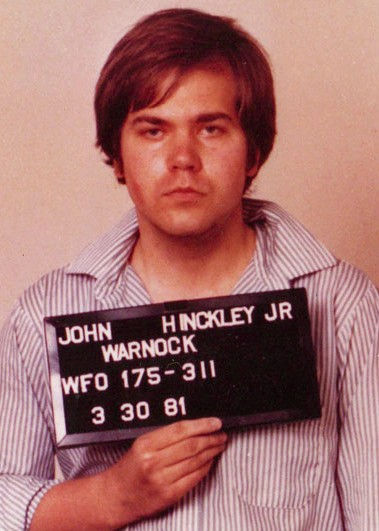
A similar firestorm erupted after the trial of John Hinckley for attempting to assassinate then-president Ronald Reagan. At trial, the defense argued to the jury that Hinckley’s claim of “irresistible impulse,” driven by his desire to impress actress Jodie Foster, established that he was insane. The prosecution, for its part, argued that it was implausible that when Reagan entered the Washington Hilton Hotel to give a speech, Hinckley did not fire, because he did not have a clear shot; yet when Reagan exited the Hilton after speaking, Hinckley’s impulse to shoot at first resistible suddenly became irresistible. The verdict ignited widespread public outrage and led 27 states to change their insanity laws.
At the time, criminal defendants raised the insanity defense in two percent of cases, and jurors rejected it 75 percent of the time. Within three years of the verdict, Congress changed the federal insanity standard that had applied to the Hinckley case: nine states narrowed the scope of conduct under which insanity could be pled; nine states made insanity an “affirmative” defense — that’s legalese for shifting the burden of proof to the defense to prove insanity, rather than requiring the prosecution to prove sanity; eight states created a “guilty but insane” verdict, under which the defendant first serves jail time, and then is committed to an asylum; and one state, Utah, abolished the insanity defense entirely. Massachusetts law requires that the prosecution prove that the defendant was insane.
Historical antecedents
In 12th-century England, “madness” emerged not as a defense to a guilty verdict, but as a way to make a defendant eligible for a royal pardon. In 1505, the first acquittal on grounds of insanity occurred. The first formal ruling, to be applied in future cases, was proclaimed in 1843, when Daniel M’Naghten’s paranoid fear that Prime Minister Sir Robert Peel was persecuting him led him to shoot Peel’s secretary by mistake.
The judge charged the jury with answering two questions: First, did the defendant understand the “nature and quality” of his act; and second, did the defendant know right from wrong? Stripped to its essence, if the defendant knew that he was killing a person, and that such act was a crime, he was sane; if, conversely, he thought he was zapping space aliens, he was not.
Throughout nearly two centuries, American courts have attempted to inject medical standards into criminal cases, such as the “irresistible impulse” test, or asking whether the defendant’s act was the “product of a mental disease or defect.” (In a 1908 case, one Canadian judge took a different view: “If you cannot resist an impulse in any other way, we will hang a noose in front of your eyes, and perhaps that will help.”)
Adopting a more realistic standard
The 1843 rule has a singular virtue: It is the only standard that lay jurors can reasonably be expected to apply. Applied to Hinckley, did he know that he was trying to murder the president, and that it was murder? Applied to Clancy, did she know that she was strangling her three children and that it was murder? In response to the defense’s assertion that Clancy frequently suffered hallucinations and deep depression, the prosecution cited “lucid intervals” as times when Clancy could plan and carry out the triple killings — in this case, when she sent her husband out of the house on an errand.
A hidden factor one juror revealed — I’m NOT making this up — was that the jurors described the defense attorney as “entertaining” and “compassionate,” whereas they decided the two prosecutors lacked compassion and were “unprofessional.” Also, unanswered in any of the news coverage I consulted was a key question: How experienced were the expert witnesses in testifying in court? This matters because witnesses can testify in different ways.
A skilled cross-examiner can frame questions so as to elicit a “yes” or “no” answer only. Conversely, expert witnesses cannot be confined to a yes-or-no choice. They can argue during cross-examination: They can question assumptions, argue that the question is irrelevant to the matter at hand, and disavow sources the opposition relies upon. As one of my law professors, a federal judge, put it during a trial advocacy class, a medical expert witness can disavow Grey’s Anatomy.
Thus, the medical expertise of the prosecution witnesses is far less important than their experience as trial witnesses, in challenging cross-examiners. Lay jurors cannot compare relative medical expertise, but they can recognize when lawyers break down a witness and vote accordingly.
Thus, as both sides in these cases routinely have experts testify, how realistic is it to ask lay jurors to decide which side’s experts are correct? Imagine that you are seeking a diagnosis of a persistent, severe ailment, and after seeing two doctors who disagree, you go out into the street and stop the first dozen adult passersby. You ask them to vote on which doctor’s diagnosis is better. They must decide unanimously, else you will convene a second impromptu street panel. Would you trust them? One may as well use a dartboard to decide. It is far faster and much cheaper.
The bottom line is that lay jurors are neither mind-readers nor doctors. Thus, the law should not make them reach a verdict based upon their presumed collective ability to ascertain whether a defendant’s specific mental state or other medical condition excuses acts that would otherwise be criminal.


