

Colonel Lewis Morris: a forgotten patriot
By Peg Eastman
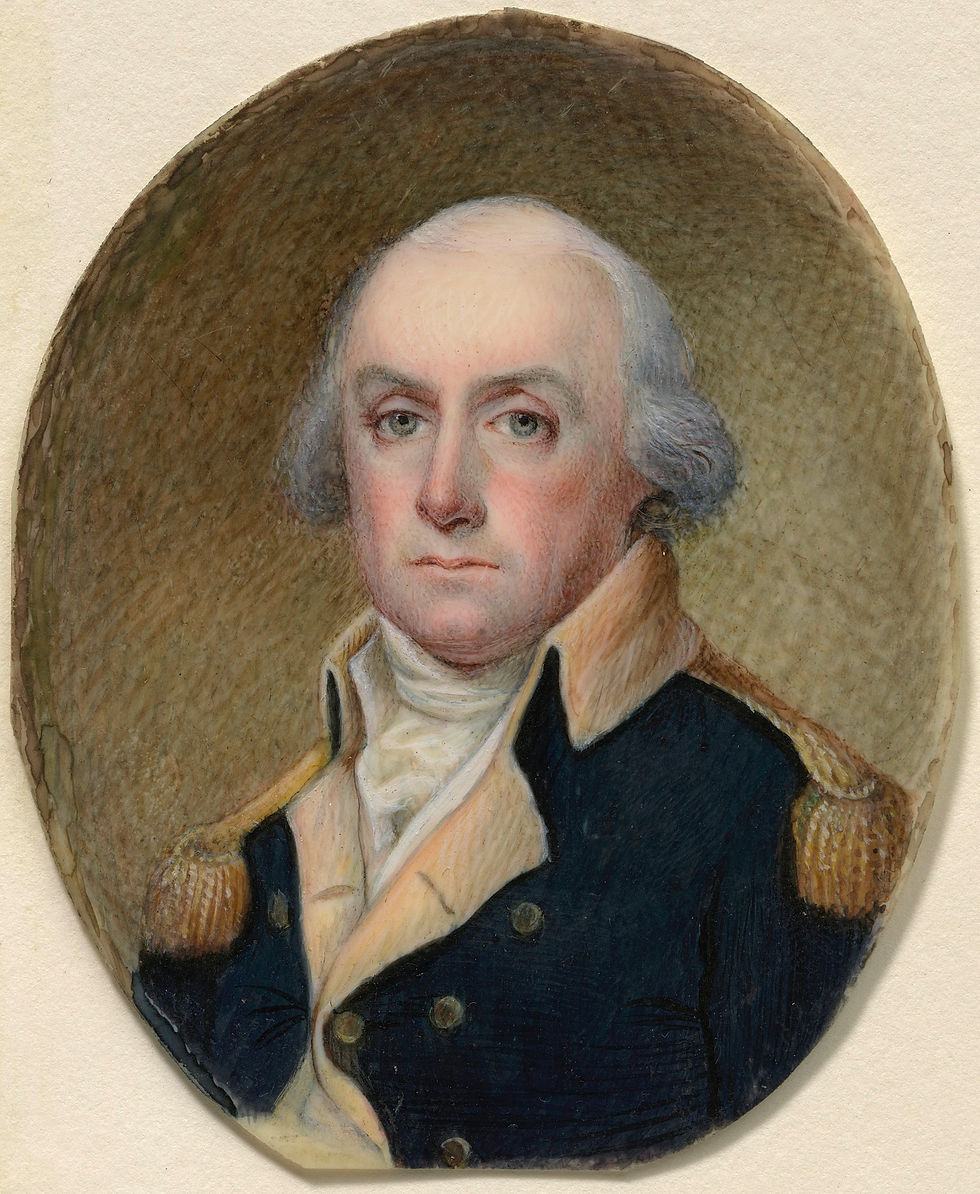
To honor the nation’s 250th anniversary, this is another article about patriots who were in Charleston during the Revolutionary era. Coincidentally, this patriot also attended St. Michael’s Church, which is celebrating its 275th anniversary. Unfortunately, time has practically erased his memory.
This all-but-forgotten revolutionary patriot was Lewis Morris (1754-1824), son of Lewis Morris (1726-1798). At its zenith, the Morris family was a political powerhouse in both New Jersey and New York and produced several of the nation’s Founding Fathers.
His great-grandfather, Richard Morris (1616-1672), immigrated to New York via Barbados after serving in Oliver Cromwell’s army during the English Civil War of 1648. (The Cromwellians left the island when the monarchy was restored in 1660.)
Richard Morris purchased a large tract of land in the Bronx, then part of the Province of New York. This vast tract became the basis for Morrisania Manor, an estate in Westchester County. When he inherited it, Richard’s son Lewis Morris (1671-1746) expanded and patented the estate. He became chief justice of New York. Also owning considerable land in New Jersey, he served as the eighth colonial governor of New Jersey. He was a popular governor who championed the colonists’ land-owning rights. Morristown, New Jersey, was named for him. Morrisiana was inherited by his son, Lewis Morris (1698-1762), and his grandson, Lewis Morris (1726-1798), who signed the Declaration of Independence as a delegate from New York to the Continental Congress in Philadelphia.
Gouverneur Morris (1752-1816) was another son of Lewis Morris (1698–1762) and his second wife, Sarah Gouverneur (1714–1786). Morris's first name derived from his mother's surname. She was from a Huguenot family that had first fled to Holland and then to New Amsterdam during the 16th-century French Protestant persecutions.
Gouverneur, a gifted scholar, enrolled at King’s College (Columbia University) in New York City at age 12, graduating in 1768, and went on to receive a master’s degree in 1771. He studied law and was admitted to the bar in 1775. He is known for writing the preamble for the U. S. Constitution and, after its ratification, served as minister plenipotentiary to France, where he criticized the French Revolution and execution of Marie Antoinette. Returning to the U.S., he was elected to the United States Senate and later served as chairman of the Erie Canal Commission and as a commissioner who created the plan to establish New York City’s street grid.
Our Lewis Morris grew up in Morrisania and graduated from the College of New Jersey (Princeton) in 1774. By 1776, he was a major in the New York militia, serving as aide-de-camp to Generals Charles Lee, John Sullivan and Nathaniel Greene. For acts of bravery in the Rhode Island Campaign, he was brevetted a lieutenant colonel in the Continental Army. When Greene was given command of the Southern Continental Army in 1780, Morris came to South Carolina and remained in the state at the war’s conclusion.
In 1783, he married Ann Barnett Elliott, daughter and heiress of William Elliott and Sabina Codner. Through this marriage, he obtained a share of Accabee Plantation on the Charleston Neck. He purchased Hope Plantation (1,700 acres) on the Pon Pon River in St. Bartholomew’s Parish from the estate of his wife’s sister, Sabina, and Daniel Huger. He soon added more land, bringing the total to 2,200 acres. In 1795, Morris purchased 34 Meeting Street from the executors of the estate of Mrs. Elizabeth Izard Blake. This charming double house was, at the time, known as the short-term residence of the ill-fated Royal Governor William, Lord Campbell, the fourth son of the Duke of Argyle.
As suited a man of his wealth and position, Col. Morris participated in Charleston’s active civic and social life. Having been an officer in the Continental Army, he was an original member of the Society of the Cincinnati. He was steward of the prestigious S.C. Jockey Club, a member of the Charleston Library Society and director of the Office of Discount and Deposit (a national bank) in Charleston.
Morris was also a member of St. Michael’s Church. As a representative of St. Michael’s and St. Philip’s parishes, he voted to ratify the U.S. Constitution in 1788. He was elected to the General Assembly five times between 1780 and 1801 and served as lieutenant governor of S.C. from 1794 to 1796.
Morris died on November 22, 1824, at his estate in New York. He was survived by his wife and children. By the time of his death, Morris had inherited Morrisania and owned four lots in New York City; Hillington patent in Otsego County, New York, and Hope Plantation in South Carolina. His son George Washington Morris (1799-1834) built the beautiful Grove Plantation house at Adams Run, across the river from Hope Plantation, ca. 1828.
This distinguished patriot loved his adopted home so much that his body was transported to Charleston and buried in St. Michael’s Churchyard.
My appreciation to Bob Stockton for contributing to this article.
A Charlestonian by birth, Margaret (Peg) Middleton Rivers Eastman is actively involved in the preservation of Charleston’s rich cultural heritage. In addition to being a regular columnist for the Charleston Mercury, she has published through McGraw Hill, The History Press, Evening Post Books, and Carologue, a publication of the South Carolina Historical Society. She is a member of the city of Charleston History Commission and serves on the board of the Friends of the Old Exchange.


